Stages Of  PD ðŸ§ ðŸ¦µðŸ’ªðŸ§·

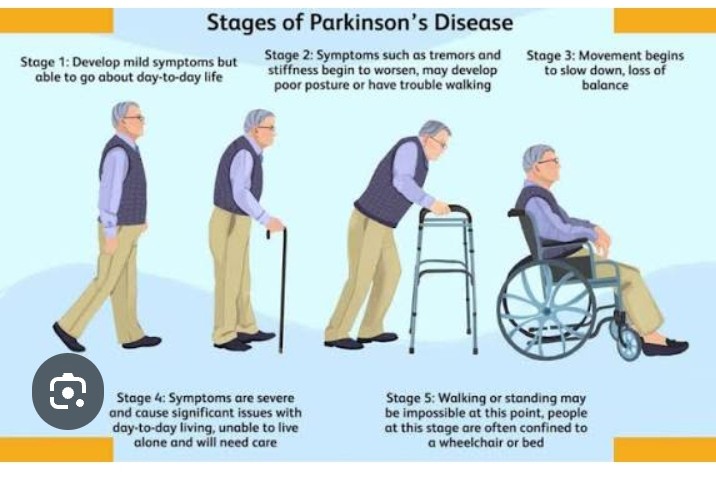
There are Five Stages Of PD:


In 1967, Hoehn & Yahr defined five stages of PD based on the level of clinical disability. Clinicians use it to describe how motor symptoms progress in PD.
Google.com
Google.com

Stage:1

On this scale, stages 1 and 2 represent early-stage, 2 and 3 mid-stage and 4 and 5 advanced-stage PD.

During this initial stage,the person has mild symptoms that generally do not interfere with daily activities.

Tremor and other movement symptoms occur on one side of the body only.

Changes in posture,walking and facial expressions occur.

Stage:2

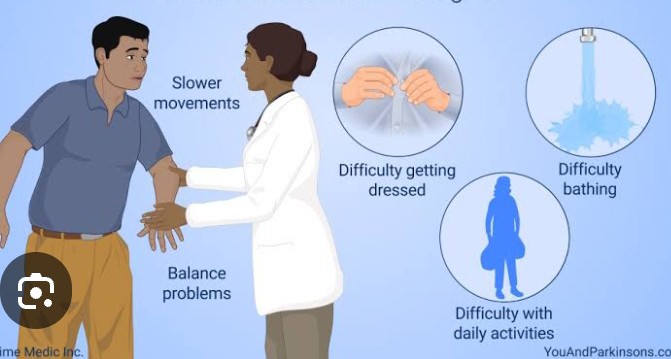
Symptoms start getting worse day by day.Tremor,rigidity and other movement symptoms affect both sides of the body or the midline (such as the neck and the trunk).

Walking problems and poor posture may be apparent.

Person is able to live alone, but daily tasks are more difficult and lengthier.

Stage:3

Considered mid-stage,loss of balance (such as unsteadiness as the person turns or when he/she is pushed from standing) is the hallmark.

Falls are more common.Motor symptoms continue to worsen.

Functionally the person is somewhat restricted in his/her daily activities now but is still physically capable of leading an independent life.

Disability is mild to moderate at this stage.

Stage:4

At this point,symptoms are fully developed and severely disabling.

The person is still able to walk and stand without assistance, but may need to ambulate with a cane/walker for safety.

The person needs significant help with activities of daily living and is unable to live alone.

Stage:5

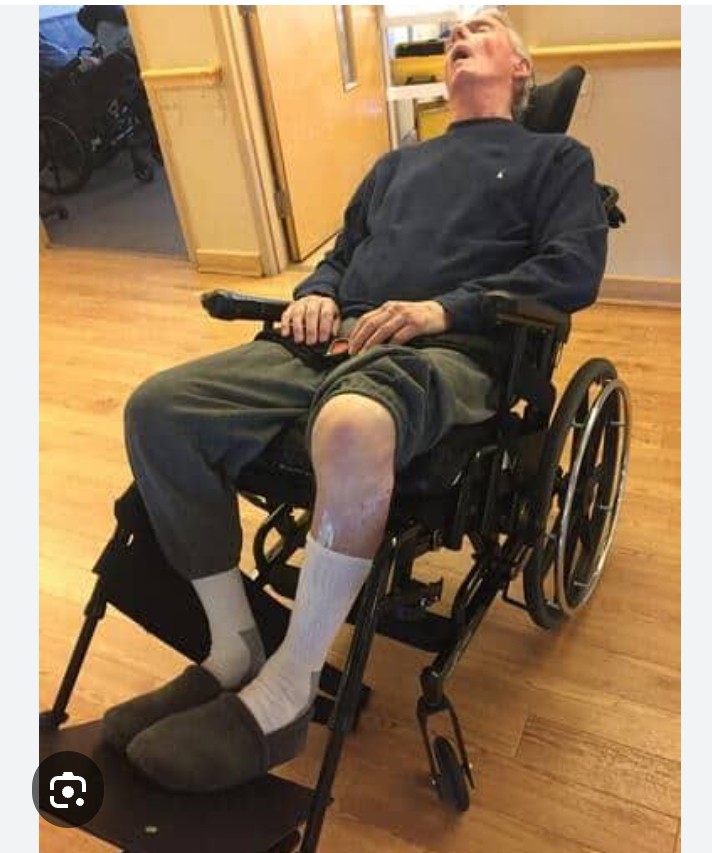
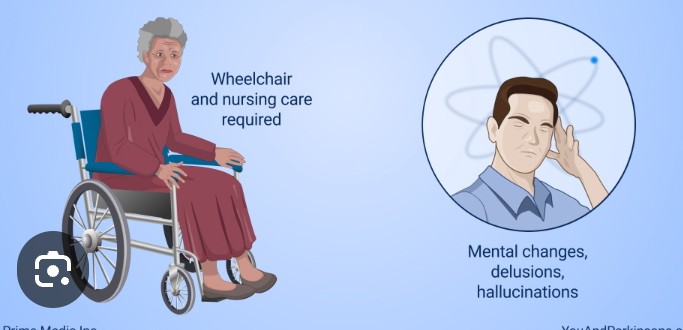
This is the most advanced and debilitating stage.

Stiffness in the legs may make it impossible to stand or walk.

The person is bedridden or confined to a wheelchair unless aided.Around-the-clock care is required for all activities.
Google.com

Literature Derived From:

https://www.parkinson.org/understanding-parkinsons/what-is-parkinsons/stages
Google.com

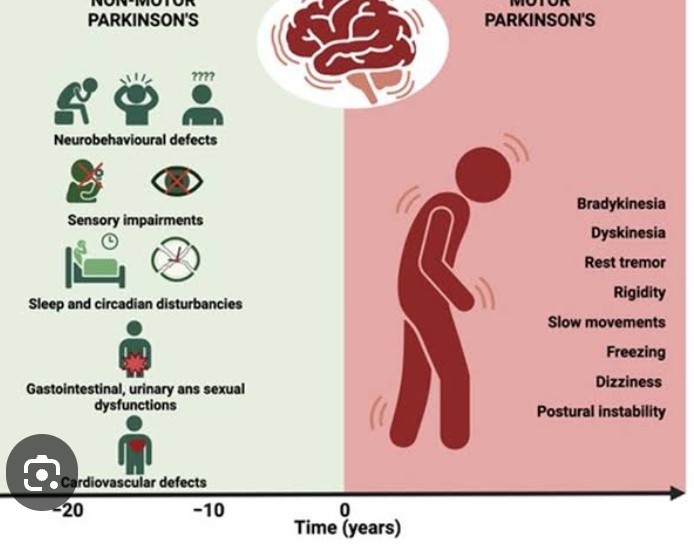
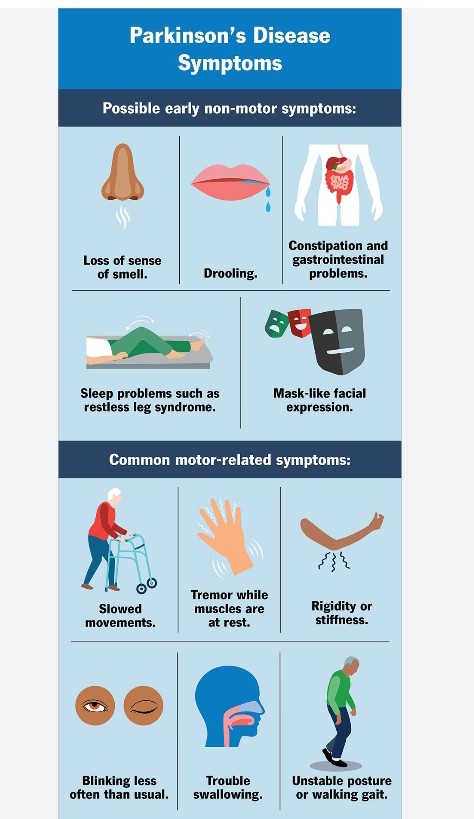
Motor & Non-Motor Symptoms Of Parkinson Disease🧠💪🦵🧷

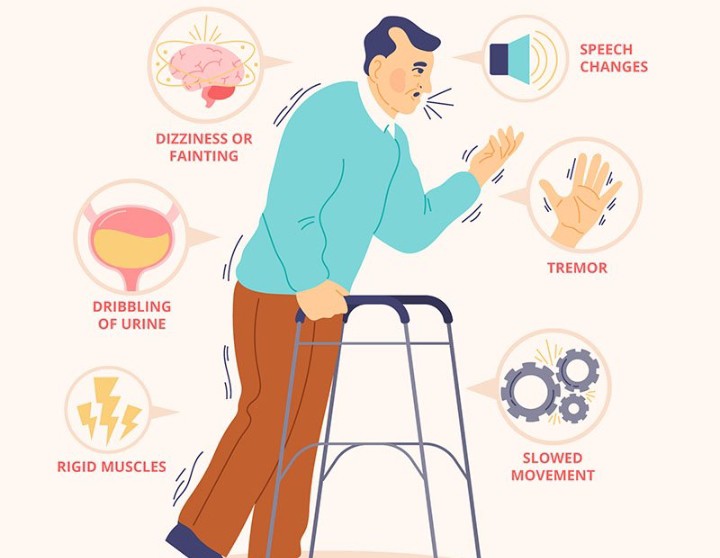
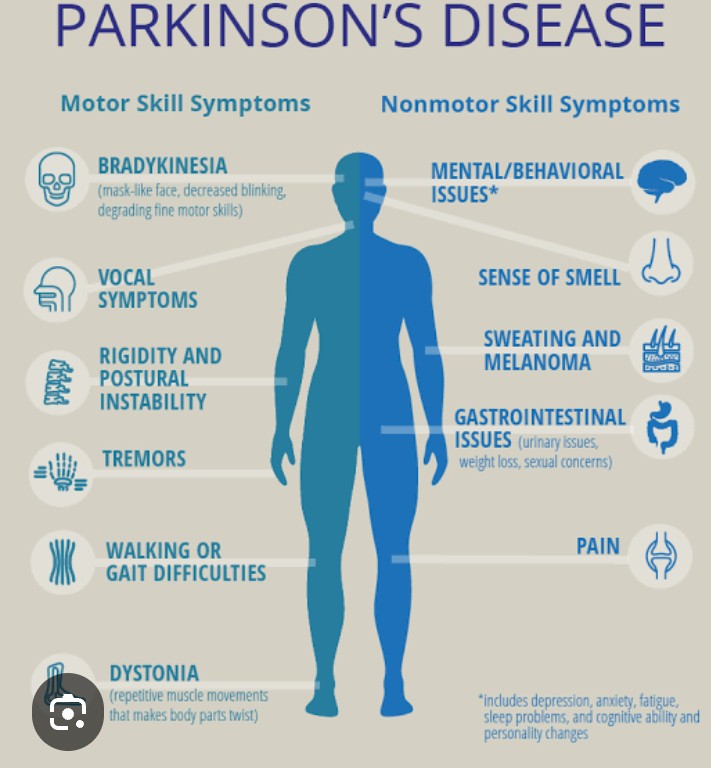
First symptom may be a barely noticeable tremor in just one hand or sometimes a foot or the jaw.Tremor is common in Parkinson’s disease.

But the disorder also may cause stiffness,slowing of movement and trouble with balance that raises the risk of falls.

Non-movement symptoms:

It can impact daily life include sleep disturbances, daytime fatigue, speech or swallowing difficulties,constipation, bladder issues,pain and more.

The Non-Motor Symptoms Scale (NMSS):

It is a 30-Item rater-based scale to assess a wide range of non-motor symptoms in patients with Parkinson’s disease (PD).

The NMSS measures the severity and frequency of non-motor symptoms across nine dimensions.

The scale can be used for patients at all stages of PD.

Google.com

Motor symptoms Of PD:

It affects your movement and balance.They are usually symptoms that other people can see.

The three main symptoms of Parkinson’s are all motor symptoms.i.e:

They are tremor, stiffness and slowness of movement.

Non-Motor Symptoms of PD:


Pain,Fatigue,Low blood pressure,Restless legs,Bladder and bowel problems,Skin and sweating,Sleep,Eating,Swallowing and Saliva control.

Google.com

Parkinson Disease 🦵💪🧠

As Defining under the wide horizon of Neurological Diseases :An old age neurological disease came into discovery by neurologists called as “Parkinson’s disease”.

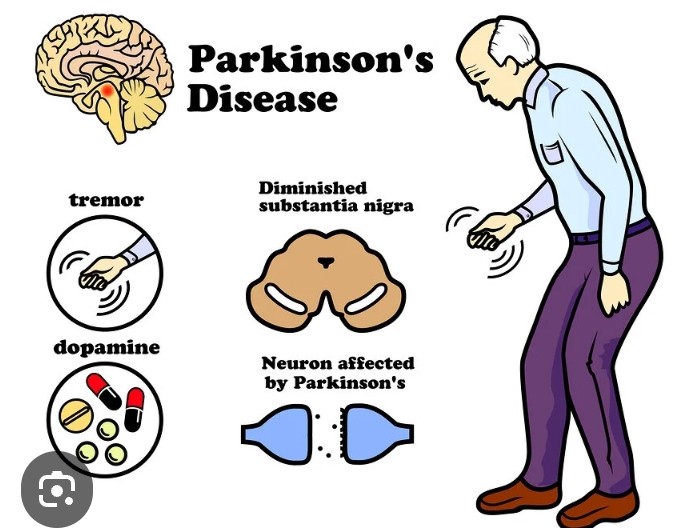
In this neurological disease,nerve cells in the brain called as Neurons slowly break down or die.Many Parkinson’s disease symptoms are caused by a loss of neurons that produce a chemical messenger in the brain.

Google.com

Diagnosis:

This messenger is called dopamine.Decreased dopamine leads to irregular brain activity.


Parkinson’s disease is a brain disorder that causes unintended or uncontrollable movements,such as shaking, stiffness, and difficulty with balance and coordination. Symptoms usually begin gradually and worsen over time.

Google.com

As the disease progresses, people may have difficulty walking and talking.

Google.com

Complex Regional Pain Syndrome ðŸ”¥

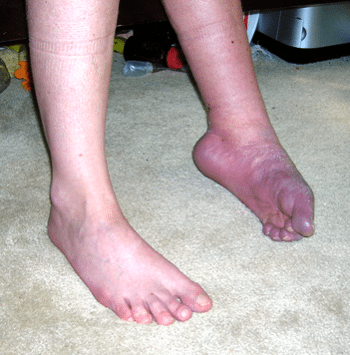
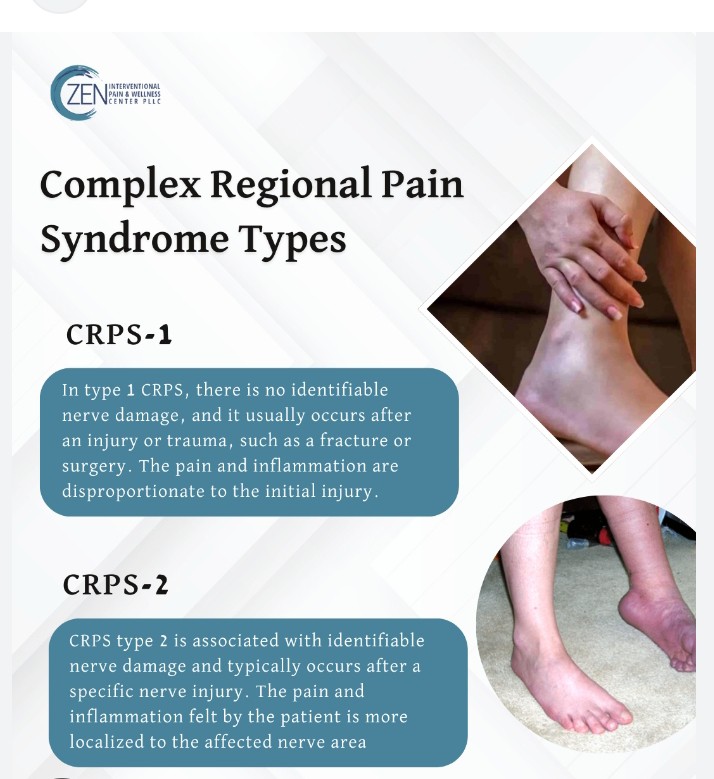
Complex Regional Pain Syndrome (CRPS) is a chronic pain condition,typically affecting a limb after an injury, where the pain is disproportionately severe and long-lasting compared to the initial injury.

It is believed to stem from a malfunction in the central and peripheral nervous systems, leading to symptoms like swelling,changes in skin temperature and color and extreme sensitivity to touch in the affected limb.

Early treatment is most effective and can lead to improvement or remission. 


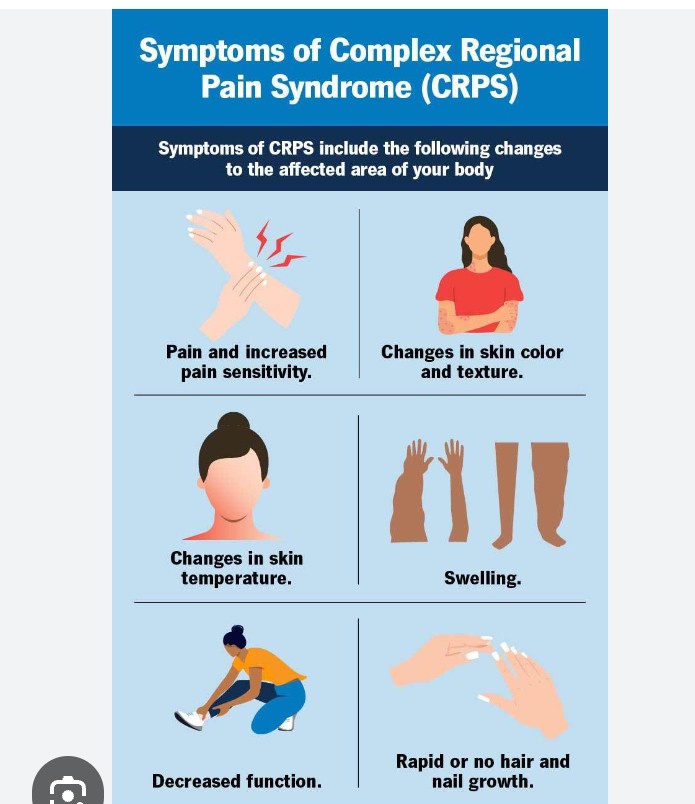
Symptoms Of CRPS:

Google.com


Pain:

A persistent,burning pain that can be spontaneous or triggered by even a light touch.


Sensitivity:

The affected area may become extremely sensitive to stimuli like temperature changes or physical touch.


Swelling:

The limb may swell or have changes in color (red, pale, or purple).


Temperature:

The skin may feel unusually warm or cold compared to the other limb.


Skin and Nail:

The skin may become shiny, thin, or sweaty while hair and nail growth can be affected.


Motor Dysfunction:

Decreased movement,stiffness, weakness or tremors can occur in the affected limb.


Causes:


CRPS is thought to be caused by damage to or a malfunction of the peripheral and central nervous systems but the exact cause is not fully understood.


It often develops after an injury, such as a fracture,surgery, sprain or burn.


Treatment:

Google.com


Treatment is most effective when started as early as possible.


Treatments can include medications,physical therapy, and pain-relieving procedures like nerve blocks.


Surgery may be considered in severe,progressive cases that do not respond to other treatments.


Skin swelling:

Swelling may come and go or remain constant.Decreased function in your affected limb: You may experience a decreased ability to move your affect.

Complex Regional Pain Syndrome (CRPS) – Stanford Medicine:


Pain from light touch or even a breeze.Persistent swelling in the injured limb.Skin that feels very hot or cold.Changes in skin color (red, purple, pale)-Stanford Medicine


Complex Regional Pain Syndrome (CRPS) is a chronic pain condition that most often affects one limb (arm, leg, hand, or foot) usually after an injury.

Google.com

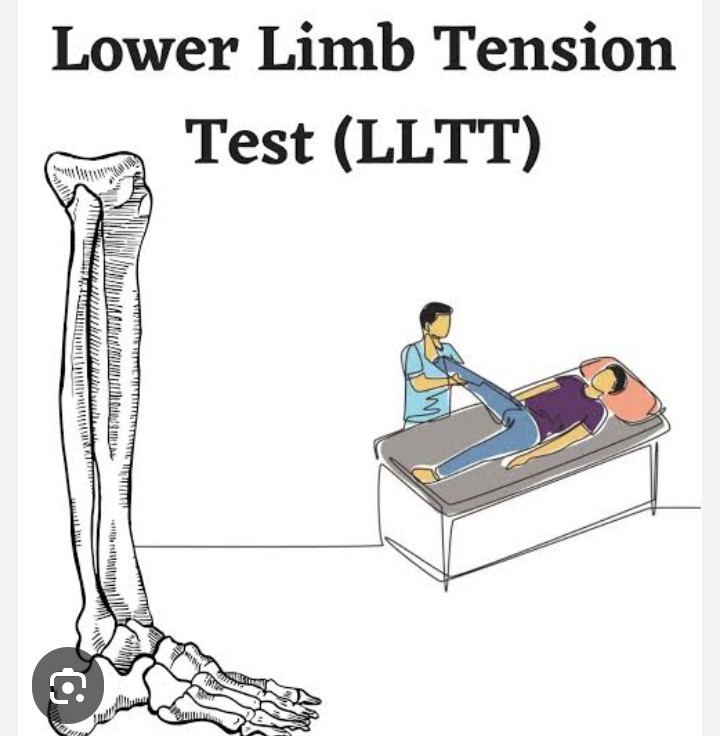
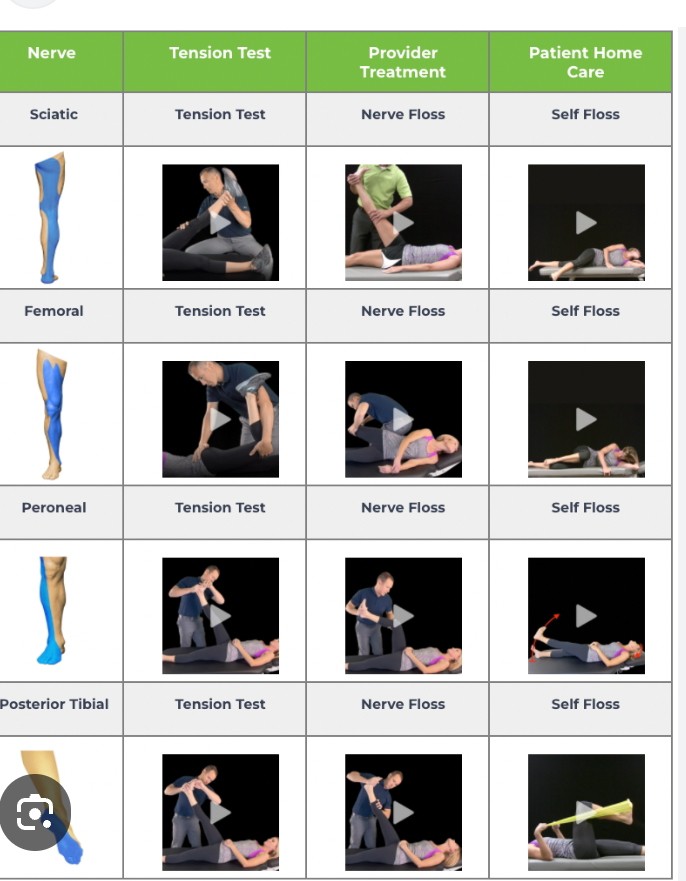
Common Lower Limb Neurodynamic Tests ðŸ¦µðŸ‘‡

 Following are the LLNT mentioned below:

Google.com

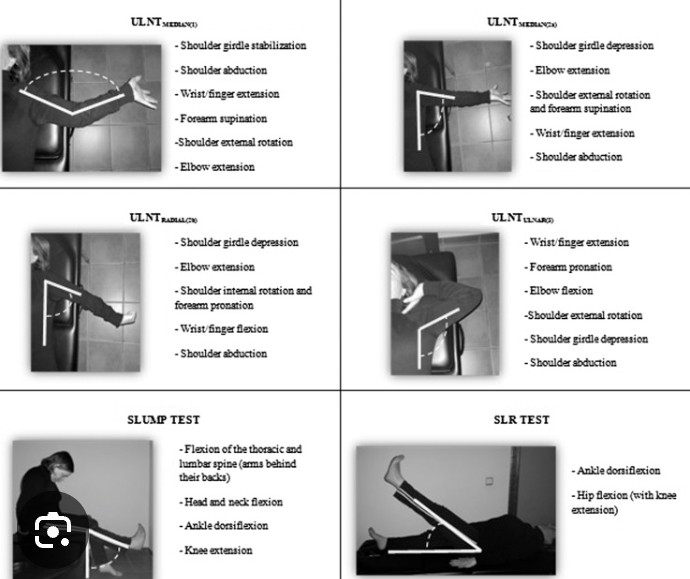
1.Straight Leg Raise (SLR) Test:

This is a fundamental test where a supine patient’s straight leg is passively lifted until their symptoms are reproduced.

Positive Result:

Reproducing radicular symptoms between \(30 degree-70 degree) suggests involvement of the L4/5 or L5/S1 nerve roots.

2.Braggard’s Test:

This is an adjunct to the SLR test.After symptoms are reproduced, the leg is lowered slightly,the ankle is dorsiflexed, and the leg is lifted again.

If the original symptoms are reproduced with dorsiflexion,it is a positive test.

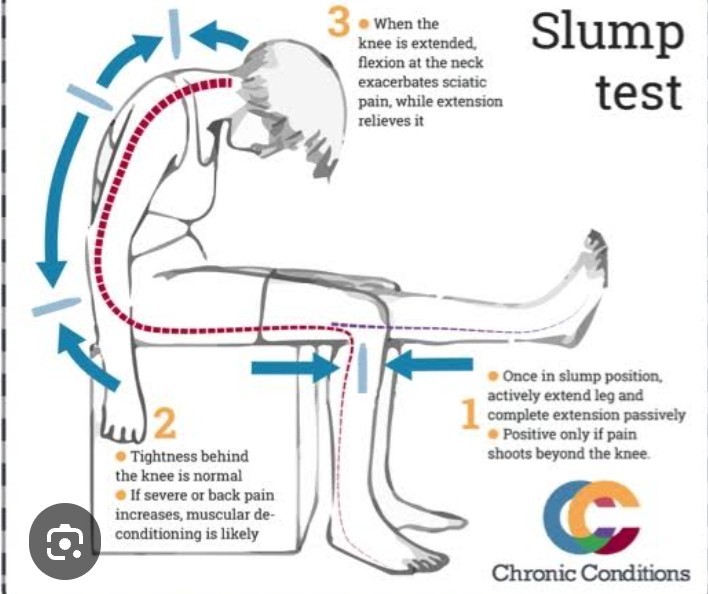
3.Slump Test:

This test is used to assess the neural structures within the vertebral canal and foramen.

Procedure:

The patient sits on the edge of a table and performs a series of movements:Slumps their back (flexes),places hands behind their back,tucks their chin to their chest and then actively extends their knee. Overpressure is applied at various stages.

Positive Result:

The reproduction of neurological symptoms like shooting pain or numbness indicates a potential issue.

4.Prone Knee Bend (PKB) Test:

This test can be used to assess for a positive response related to the femoral nerve.

Procedure:

The patient lies on their stomach and the clinician bends the patient’s knee.

Positive Result:

Reproduction of symptoms in the anterior thigh or groin can be a positive sign. 

Google.com

Why these Tests are performed?

Google.com

Identify Nerve Involvement:

They help determine if a patient’s symptoms are due to nerve compression,irritation, or tethering, rather than just muscle or joint problems.


Diagnose Conditions:

They are used in diagnosing conditions like sciatica,which is often caused by a herniated disc or nerve root entrapment.


Inform Treatment Plans:

By identifying the source of the pain.Therefore,clinicians can create more targeted treatment plans that address the true cause of the symptoms.

Google.com
Design a site like this with WordPress.com
Get started