Description Of MRP Guidelines ⛓️‍💥Stroke Patients

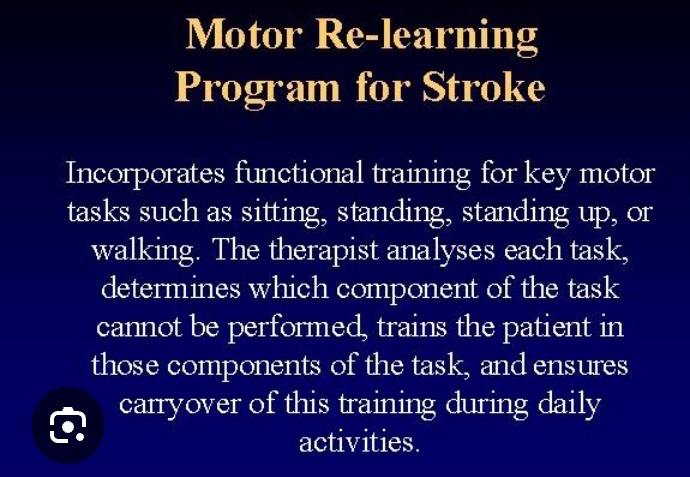
1. ANALYSIS OF TASK:


Observation as the patient performs (or anticipates to perform) the activity.


Note: Any missing components
Incorrect timing of components within a movement pattern.
Absence of specific muscle activity.


Presence of any excessive or inappropriate muscle activity.


Compensatory motor behaviour,selection of essential movements upon which the activity depends:


Selection of the most essential components if many components are missing (i.e., the patient is barely able to move)


2. PRACTICE OF MISSING COMPONENTS:


Practice at peak performance for at least 30-60 minutes or more twice daily; progression when some form of control is seen.


Switching from verbal instruction to visual demonstration or vice versa if a person does not respond.


3. PRACTICE OF TASK:


Transition from cognitive to automatic phase of learning (overlaps with Step 2)


4. TRANSFERENCE OF LEARNING:


Carry-over of learning into task performance during daily routines.

Strategies for instructing the patient:


Verbal instruction is kept to a minimum.The therapist identifies the most important aspect of the movement on which the patient will concentrate.


Visual demonstration is provided by the therapist’s performance of the task, focusing on one or two most important components.


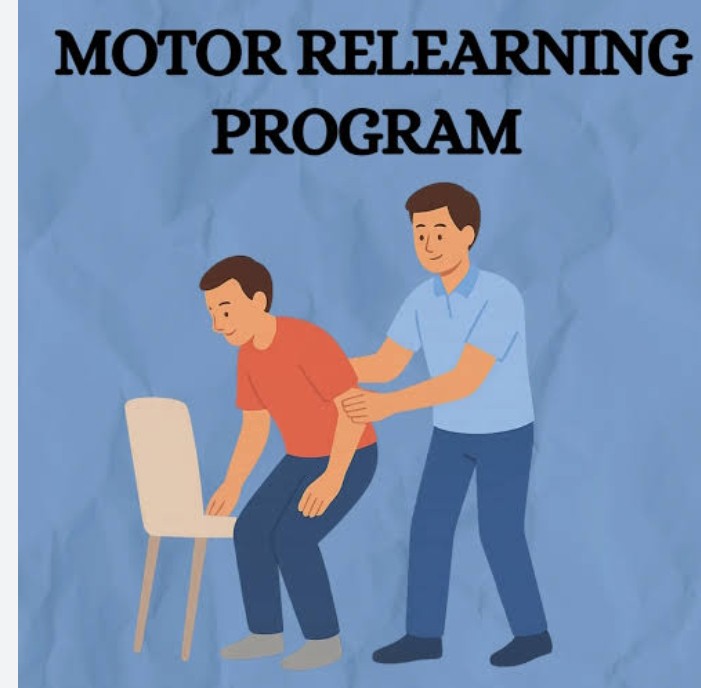
Manual guidance helps to clarify the model of action by passively guiding the patient through the path of movement or by physically constraining inappropriate components.


Accurate,timely feedback about the quality of performance helps the patient to learn which strategies to repeat and which ones to avoid.


Consistency of practice facilitates development of skill in task performance.
Google.com

MRP-Basic Guidelines 🙏Stroke Patients

The programme is composed of guidelines for evaluating and improving 7 daily functions:


Upper limb function.


Oro-facial function.


Sitting up from supine.


Sitting.


Standing up and sitting down.


Standing.


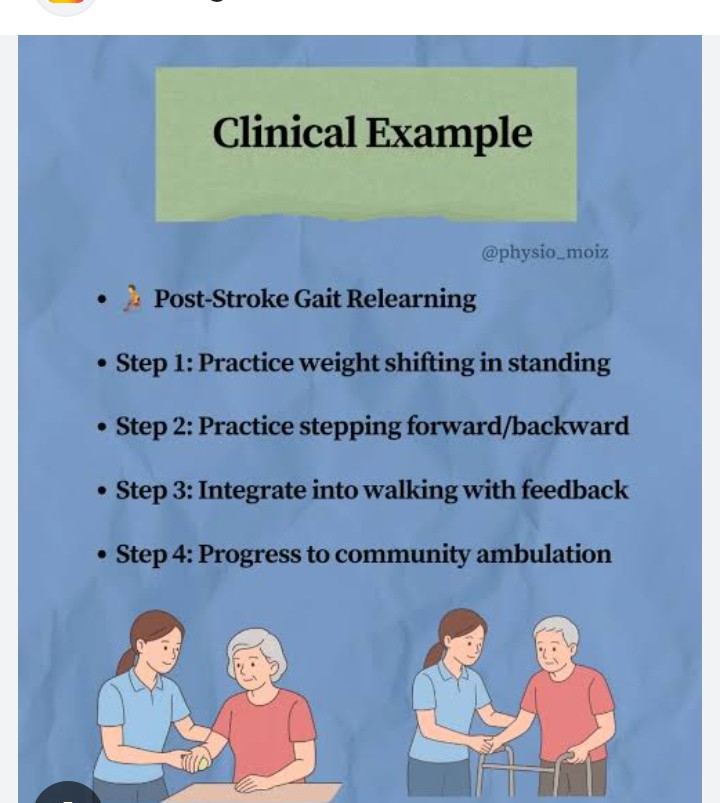
Walking.


Each section is composed of a description of normal activity (essential movement components).


Mastery of a section is not necessary before going onto another section.


There is no intent of progressing from one section to the next; the order of sections is not important.


The patient must always be actively participating in the activity (without resistance) and given some opportunity to make mistakes.

Google.com

Intervention

The Four Steps of the Motor Relearning Programme:

1. ANALYSIS OF TASK:
Observation
Comparison
Analysis

2. PRACTICE OF MISSING COMPONENTS:
Explanation – Identification of goal
Instruction
Practice plus verbal and visual feedback plus manual guidance

3. PRACTICE OF TASK:
Explanation – Identification of goal
Instruction
Practice plus verbal and visual feedback plus manual guidance
Progression:
Increase complexity
Add variety
Decrease feedback and guidance
Re-evaluation
Encourage flexibility

4. TRANSFERENCE OF LEARNING:
Opportunity to practice in context
Consistency of practice and positive reinforcement
Organization of self-monitored practice
Structured and stimulating learning environment
Involvement of relatives and staff

Google.com

Points to Ponder 💪⛓️‍💥Stroke Patients

Important points to consider for MRP(Stroke Patients):

It Includes:


Motor tasks are either practiced in entirety or broken down into components.The practice of each component is immediately followed by the practice of the entire activity.


Techniques principally comprise verbal and visual feedback and instruction and manual guidance.


Passive movement during demonstration should not persist >1-2 times.


Body alignment should be monitored consistently
Acceptable methods of progression.


Decrease in manual guidance and feedback:


Alteration in speed.


Increase in variety.


Inappropriate methods of progression.


Performance of motor activities in the neurodevelopmental sequence.


Passive ROM exercise to resistive exercise.


Parallel bars to quad cane.


Wide to narrow base of support
and Roll over before sitting balance.

Google.com

Equipment:


Objects that can be used as normally operative regulatory conditions for tasks.


Unnecessary equipment.


Parallel bars and canes.


Splints / braces that hold the ankle in dorsiflexion.

Effectiveness:


Depends on the therapist’s knowledge of biomechanics and motor control and problem-solving ability.


The therapist must recognize and analyze the motor problem, select the most essential missing component,effectively teach the patient the required movement and monitor the patient’s response.

At last,give meaningful feedback and create an environment that promotes a drive toward recovery and relearning.

Limitation:


Spasticity is not considered a significant residual problem of stroke.However,no management is recommended to reduce abnormal muscle tone.


Focus on active learning indicates limited applicability in patients with severe cognitive deficits.

Google.com

Motor Re-Learning Programme🔜


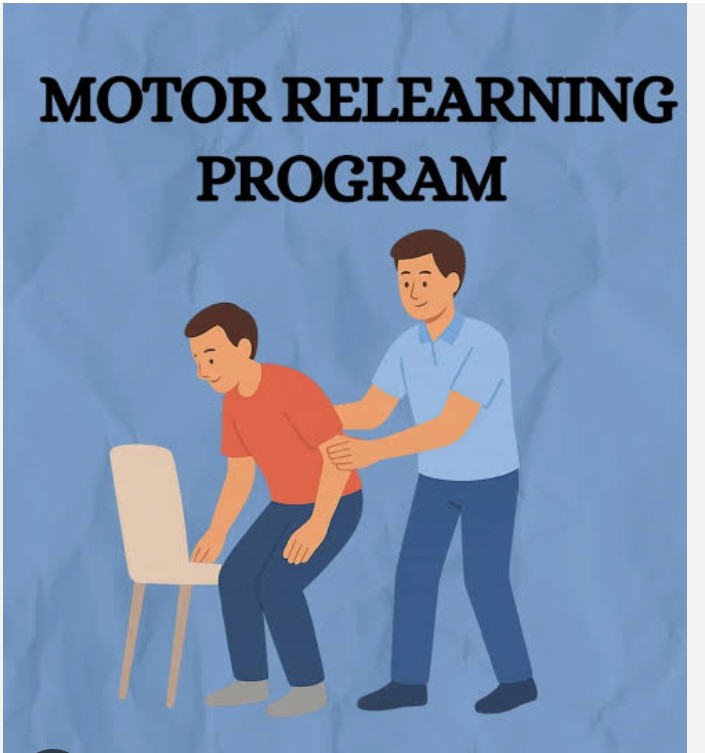
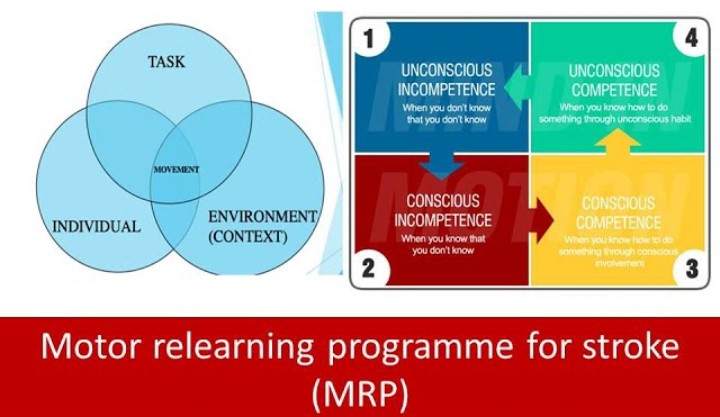
The Motor Relearning Programme (MRP) was developed by the Australian physiotherapists Janet Carr and Roberta Shepherd. It is a task-oriented approach to improving motor control, focusing on the relearning of daily activities.

It is strongly based on theories in kinesiology that emphasize a distributed (rather than a hierarchal) motor control model.

Theoretical underpinnings of the MRP:


Postural adjustments are anticipatory and ongoing.


Changes occur in muscular organization of a person occur simultaneously with the plan to move and prepare the person for performing the task.

Google.com

Motor behavior emerge as a result of context or regulatory conditions in the environment (performer-environment interaction).


Postural adjustments can be learned only in the context of task performance.


Skilled motor performance is defined as the ability to perform in different ways according to variations in environmental demands.


Deficits in generating appropriate models of action are the primary problem following stroke and not spasticity or pathologic movement synergies.


Stereotypic movement patterns are compensatory strategies that result when movement is attempted.

Google.com


Development of abnormal movement patterns in stroke:


1.Attempt to move

2.Obstacles to efficient movement


3.Diminished soft tissue extensibility


4.Impaired balance

5.Postural insecurity and resultant fixation patterns.


6.Specific muscle weakness

7.Compensatory movement strategy.

8.Repeated practice of the compensatory strategy.

9.Learned use of the compensatory strategy.

Google.com

You Thought This Was The 🔚

I am in the Trees,Places,In the Sea,In the Sky,Here & There,I will be Everywhere.Through waiting GRASS,the Fuckin’ Months & Years will Pass but You Can’t Have Me Now.

Google.com

I did Something Good ,Duh Really! Everything is gonna be Alright ,It’s gonna be a better & good life soon.Better Days are Coming,The Dawn & The Sunshine are on their Way.You are Gone Because I’d Already LEFT ◀️

Google.com

It’s Turning into New Shade Of Blue 🔵The Painless SOUL & BLOOD is now pleasurable to feel,these Footsteps & Dusty presence doesn’t affect ME anymore.

Google.com
Design a site like this with WordPress.com
Get started