Sixth Lesson:Empathy 🦀🦁

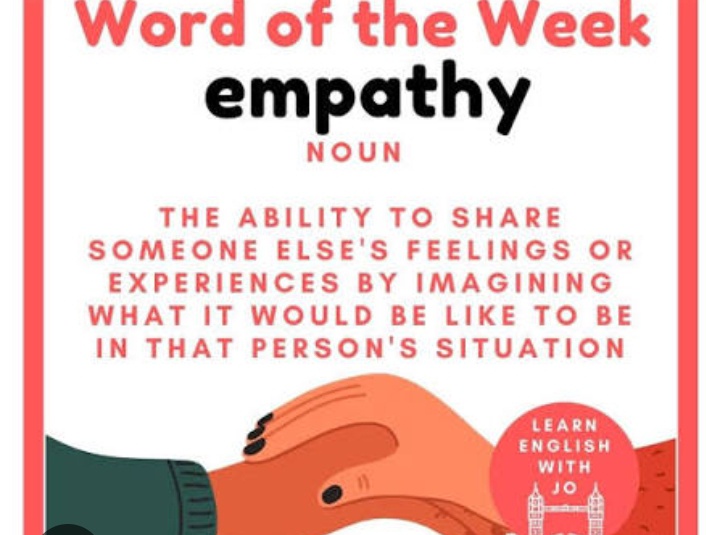
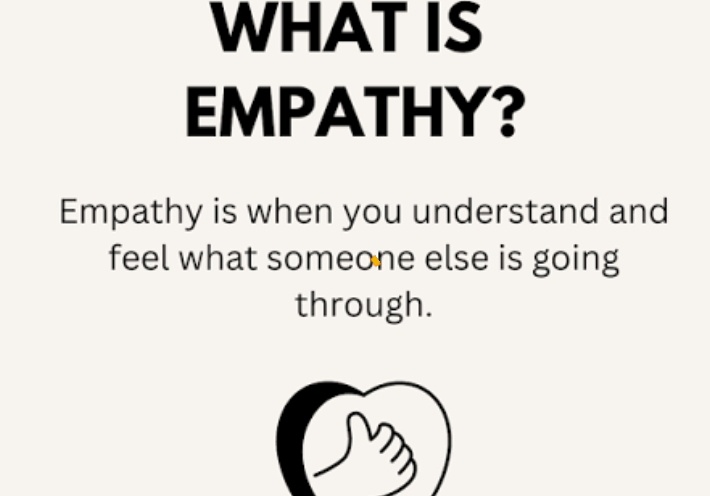
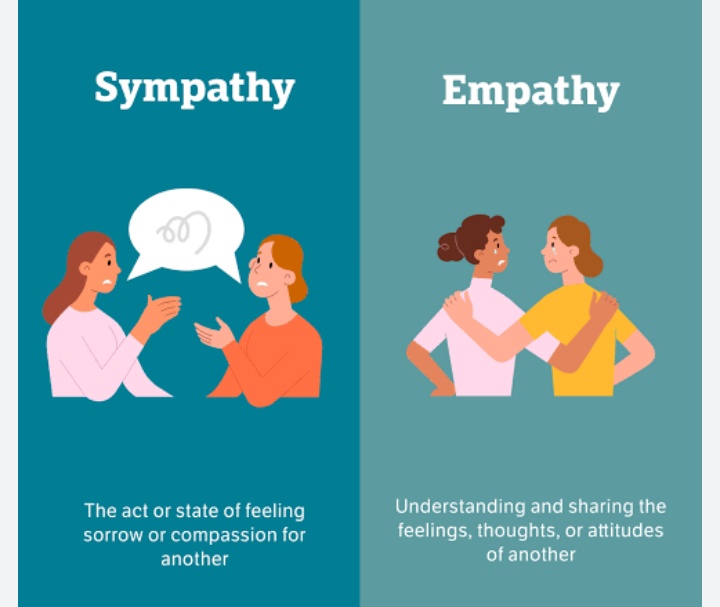
Empathy is the ability to see things from another’s perspective and feel their emotions.

Putting yourself in another person’s shoes might lead you to act with compassion and do what you can to improve their situation.

In doing so,You can reduce the other person’s distress as well as your own.

Empathy can be seen as a type of social intelligence that helps people to connect with others, build relationships and work together more effectively.

The Three Major Levels of Empathy are Cognitive Empathy, Emotional Empathy and Compassionate Empathy.
Google.com

.

Google.com

Teresa Wiseman identified four attributes of empathy:


Taking on someone else’s perspective.


Being Non-judgmental.


Recognizing someone else’s emotion or understanding their feelings.


Communicating your understanding of a person’s feelings.

Stepping into empathy means releasing the burden of judgment and holding space for mystery, complexity and compassion.
Google.com

Treat others as You would like to be treated Yourself.

You Absorb Other People’s Energy—So Be Selective About Who You Spend Time With Empaths often take on the emotions and stress of others without realizing it.

This can be draining, especially around negative or toxic people.
Google.com

Fifth Lesson: Forgiveness 🦿♠️♦️

Fifth Lesson is Forgiveness which defines “Willfully putting aside feelings of resentment toward an individual who has committed a wrong,been unfair or hurtful or otherwise harmed one in some way.”

Forgiveness is not equated with reconciliation or excusing another and it is not merely accepting what happened or ceasing to be angry.

Google.com

These Five kinds of Forgiveness are:

(1) Eternal Forgiveness — this relates to the matter of life;

(2) Instrumental Forgiveness — this relates to the church;

(3) Restorative Forgiveness — this relates to fellowship;

(4) Governmental Forgiveness — this relates to discipline; 

(5) Kingdom Forgiveness —this relates to every human who inherits the Kingdom of God is a forgiven sinner who has practiced a lifestyle of forgiveness.

Forgiveness includes acknowledging that you are hurt,accepting the pain as your own, and being honest with yourself about the effect it’s had on you.

Google.com

Forgiveness is crucial for emotional, psychological, and spiritual well-being, allowing you to release bitterness, reduce stress, heal from hurt, and improve relationships by letting go of resentment and fostering compassion, enabling personal growth, inner peace, and a stronger connection with others and the divine.

Google.com

Fourth Lesson:Stand Up For Yourself ♟️☠️

Stand up for yourself” in every condition means to assertively defend your rights,opinions, needs, and boundaries, refusing to let others bully, disrespect or walk over you, which involves speaking your truth calmly and clearly to maintain self-respect and build confidence.

Google.com

It’s about being strong in conflicts,setting limits and ensuring your voice and worth are recognized not by being aggressive but by communicating calmly and expecting respect.

Google.com

Key aspects of Standing up for Yourself:


Assertiveness:

Clearly communicating your needs and feelings without aggression or being a doormat.

Setting Boundaries:

Saying “No” defining what’s acceptable and enforcing those rules in relationships.


Self-Respect:

Upholding your integrity and believing in your own worth, even if others don’t.


Voice & Action:

Speaking up in the moment, not letting others control your thoughts, and taking charge of your life.


Calmness:

Often done calmly and respectfully, rather than through yelling or aggression, to be effective.

Google.com

Third Lesson:Kindness ⚖️

Kindness doesn’t mean ignoring people when they do things that are unkind, wrong, ignorant, racist or discriminatory.It doesn’t mean keeping quiet when you disagree with someone about a moral issue.But it does mean treating people with respect.

Google.com

Kindness is a high moral standard.It is living a life that strives to always do what is right. It is understanding the impact our words and actions have on others (regardless of our intent).Kindness is a constant goal.

It is not something to be conquered.Instead it is a life’s work.It is apologizing when we fail and it is committing to do better.Kindness is understanding that we are all human and thus kindness is also forgiving others when they fail at being kind but also being clear that forgiveness comes with an expectation to do better next time.


Kindness isn’t always easy. Sometimes it can be messy. Sometimes it can be scary.

Google.com

But it is always the right thing to do.

Google.com

Second Lesson:Gratitude 🙏♠️♦️♟️

Gratitude is when you feel thankful for the good things in your life.

This could be stuff people often take for granted, like having a place to live, food, clean water, friends, and family.

Gratitude is taking a moment to reflect on how lucky you are when something good happens, whether it’s small or big.

Google.com

Gratitude turns what we have into enough and more” (Melody Beattie) or “If the only prayer you ever say in your entire life is thank you,it will be enough” (Meister Eckhart)

Google.com
Design a site like this with WordPress.com
Get started