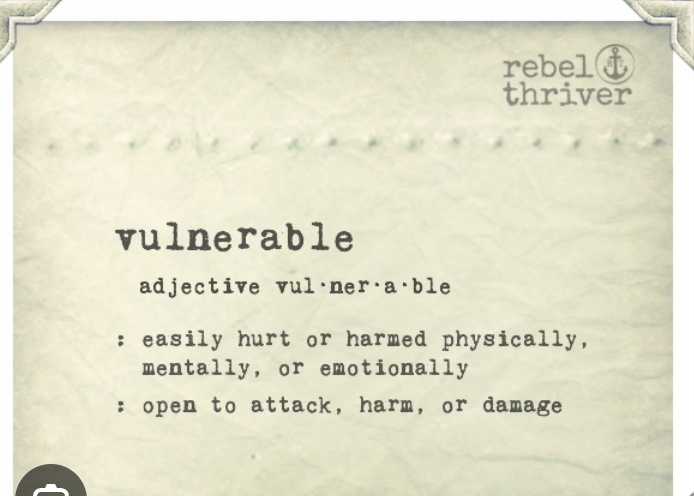
Vulnerability refers to “the quality or state of being exposed to the possibility of being attacked or harmed, either physically or emotionally.”
The understanding of social and environmental vulnerability,as a methodological approach, involves the analysis of the risks and assets of disadvantaged groups.
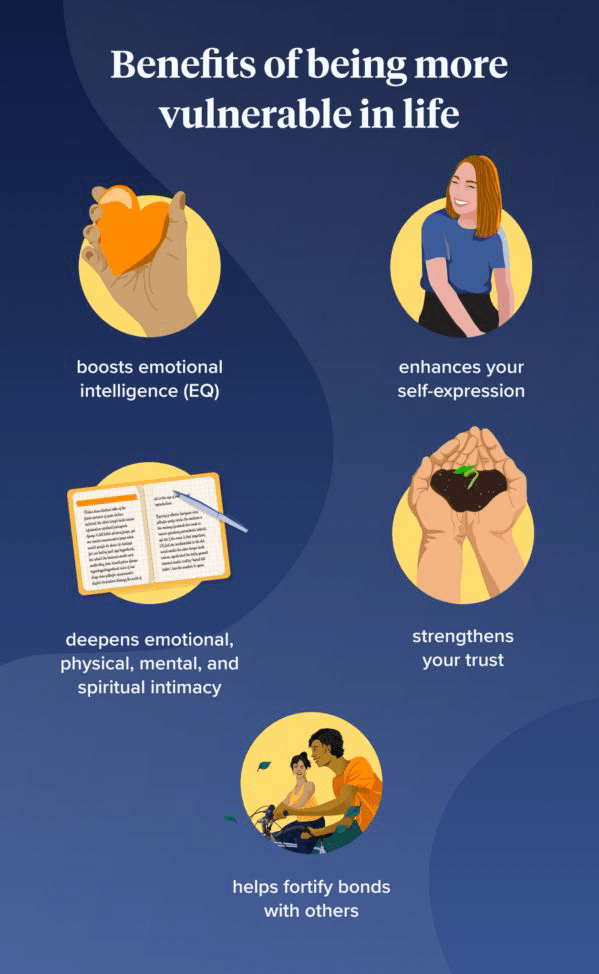
However, vulnerability is not weakness.Vulnerability is the core of emotions and feelings.If we prevent ourselves from being vulnerable,we foreclose on experiencing our emotions.
Our attempts to prevent shame,embarrassment and sadness also prevent us from experiencing love,belonging, joy, and empathy.
Key Signs Of Vulnerability:
Appearance and Atmosphere:
What you see first,including physical problems such as bleeding.
Behaviour:
What individuals are doing and if this is appropriate behaviour given the situation.
Communication:
What individuals say and how they say it.
Vulnerability is most often associated with poverty but it can also arise when people are isolated,insecure and defenseless in the face of risk, shock or stress.
Four Stages Of Vulnerability:
A vulnerability management process can vary between environments but most should follow these four stages, typically performed by a combination of human and technological resources:
Identifying vulnerabilities.
Evaluating vulnerabilities.
Ereating vulnerabilities.
Reporting vulnerabilities.
There are three dimensions of vulnerability:
Exposure,Sensitivity and Adaptive capacity.
People may become vulnerable due to their age,personal circumstances or external influences such as intoxication, harassment or exploitation.
 PHYSIOHEALER.