Treatment includes for several underlying reasons for Parkinsonism:
Medications:
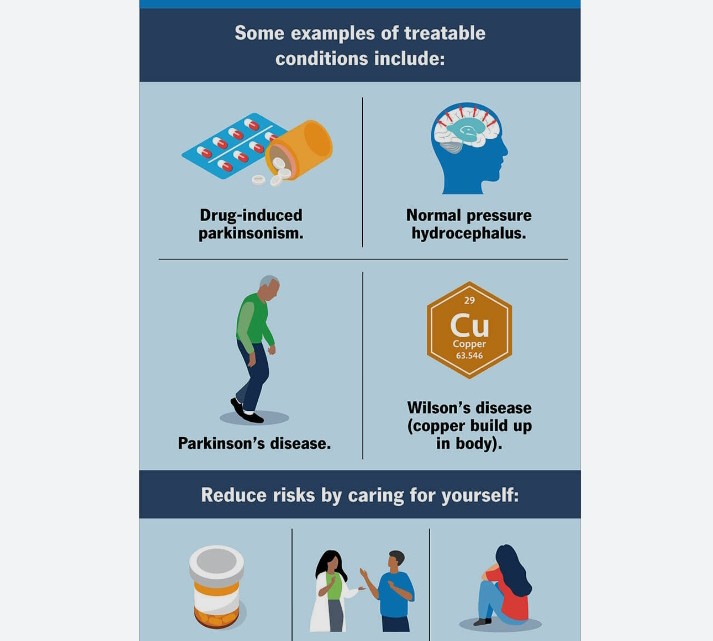
Several medications can cause a parkinsonism-like effect.The Parkinson’s-like effects are often temporary if you stop taking the medication that caused them before the effects become permanent.
However,the effects can linger for weeks or even months after you stop taking the medication.
Encephalitis.Inflammation of your brain,known as encephalitis,can sometimes cause parkinsonism.
Toxins and poisons:
Exposure to several substances, such as manganese dust,carbon monoxide,fumes from welding or certain pesticides can lead to parkinsonism.
Damage from injuries:
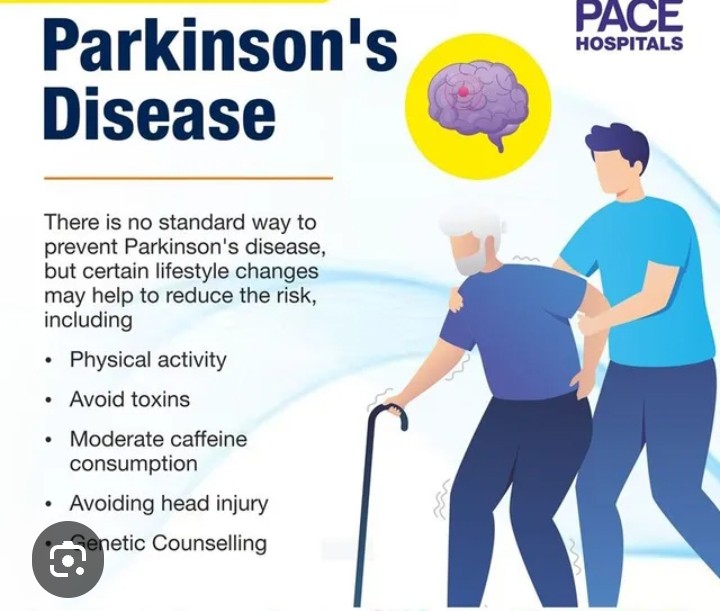
Repeated head injuries, such as those from high-impact or contact sports like boxing, football, hockey, etc can cause brain damage. The term for this is “post-traumatic parkinsonism.”
Diagnosis and Tests:
It can varies from patient to patient :
Diagnosing Parkinson’s disease is mostly a clinical process, meaning it relies heavily on a healthcare provider examining your symptoms,asking questions and reviewing your medical history.
Some diagnostic and lab tests are possible but these are usually needed to rule out other conditions or certain causes.
But most lab tests aren’t necessary unless you don’t respond to treatment for Parkinson’s disease which can indicate you have another condition.
What tests will be done to diagnose this condition?
When healthcare providers suspect Parkinson’s disease or need to rule out other conditions,various imaging and diagnostic tests are possible.
These include:
Blood tests (these can help rule out other forms of parkinsonism).
Computed tomography (CT) scan.
Genetic testing.
Magnetic resonance imaging (MRI).
Positron emission tomography (PET) scan.
New lab tests are possible as
Researchers have found possible ways to test for possible indicators of Parkinson’s disease.
Both of these new tests involve the alpha-synuclein protein but test for it in new,unusual ways.
While these tests can’t tell you what conditions you have because of misfolded alpha-synuclein proteins,that information can still help your provider make a diagnosis.
The two tests use the following methods:
1.Spinal tap:
One of these tests looks for misfolded alpha-synuclein proteins in cerebrospinal fluid, which is the fluid that surrounds your brain and spinal cord.
This test involves a spinal tap (lumbar puncture), where a healthcare provider inserts a needle into your spinal canal to collect some cerebrospinal fluid for testing.
2.Skin Biopsy:
Another possible test involves a biopsy of surface nerve tissue. A biopsy includes collecting a small sample of your skin, including the nerves in the skin. The samples come from a spot on your back and two spots on your leg.
Analyzing the samples can help determine if your alpha-synuclein has a certain kind of malfunction that could increase the risk of developing Parkinson’s disease.
Management and Treatment:
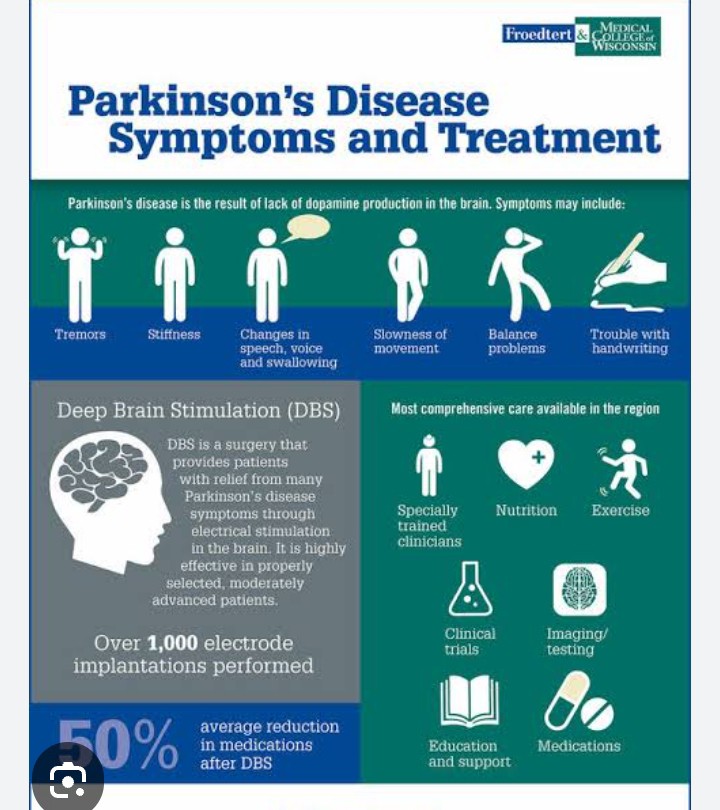
For now,Parkinson’s disease isn’t curable but there are multiple ways to manage its symptoms.The treatments can also vary from person to person,depending on their specific symptoms and how well certain treatments work. Medications are the primary way to treat this condition.
A secondary treatment option is surgery to implant a device that will deliver a mild electrical current to part of your brain (this is known as deep brain stimulation).
There are also some experimental options,such as stem cell-based treatments, but their availability often varies, and many aren’t an option for people with Parkinson’s disease.
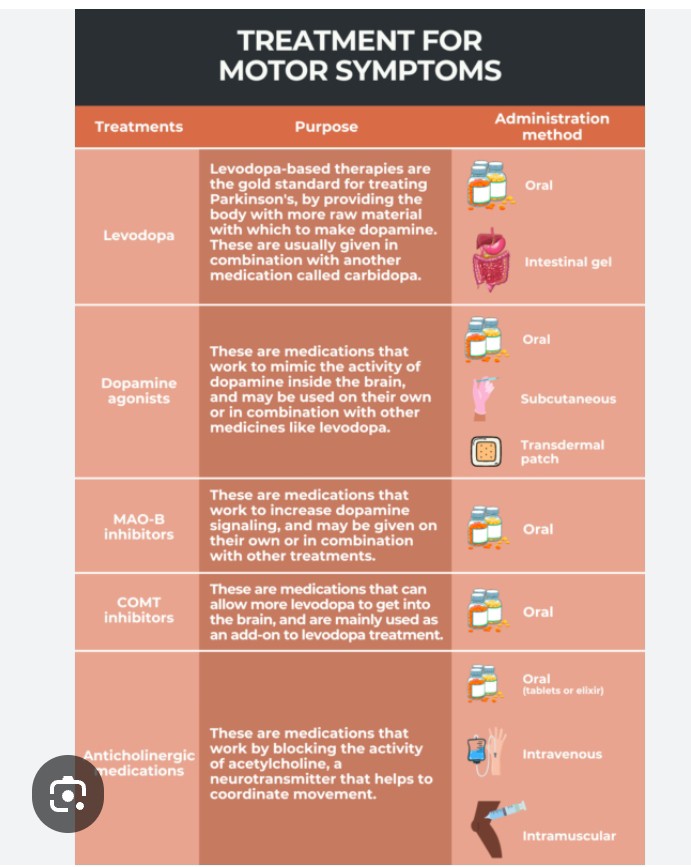
Medication treatments for Parkinson’s disease fall into two categories:
Direct Treatments And Symptom Treatments:
Direct treatments target Parkinson’s itself.
Symptom treatments only treat certain effects of the disease.
Medications:
Medications that treat Parkinson’s disease do so in multiple ways.Because of that, drugs that do one or more of the following are most likely:
1.Adding Dopamine:
Medications like levodopa can increase the available levels of dopamine in your brain.
This medication is almost always effective and when it doesn’t work,that’s usually a sign of some other form of parkinsonism rather than Parkinson’s disease.
2.Long-Term Use Of Levodopa:
eventually leads to side effects that make it less effective.
Simulating dopamine. Dopamine agonists are medications that have a dopamine-like effect.
These are more common in younger patients to delay starting levodopa.
Dopamine metabolism blockers.
Medications that block your body from breaking down dopamine allow more dopamine to remain available to your brain.
Your healthcare provider is the best person to tell you more about the likely side effects and complications that you might experience.
These are specially useful early on and can also help when combined with levodopa in later stages of Parkinson’s disease.
3.Levodopa Metabolism Inhibitors:
These medications slow down how your body processes levodopa,helping it last longer. These medications may need careful use because they can have toxic effects and damage your liver.
They are most often used to help as levodopa becomes less effective.
4.Adenosine Blockers:
Medications that block how certain cells use adenosine (a molecule used in various forms throughout your body) can have a supportive effect when used alongside levodopa.
Therapies For Parkinson Disease:

Google.com
We Shared Two Therapies in this Article:
1.Stem Cell Therapy.
2.Gene Therapy.
Health professionals tell attendees of Parkinson patients what they can do to minimize these side effects or complications which affect ADLs.
 PHYSIOHEALER.