The terms “Lasegue test” and “straight leg raise test” are synonyms or being used interchangeably for the same physical examination maneuver used to assess nerve root irritation in the lower back.
It involves passively lifting a patient’s leg with the knee straight to see if it causes pain that radiates down the leg, which can indicate conditions like a herniated disc.
There are no differences between the two names.
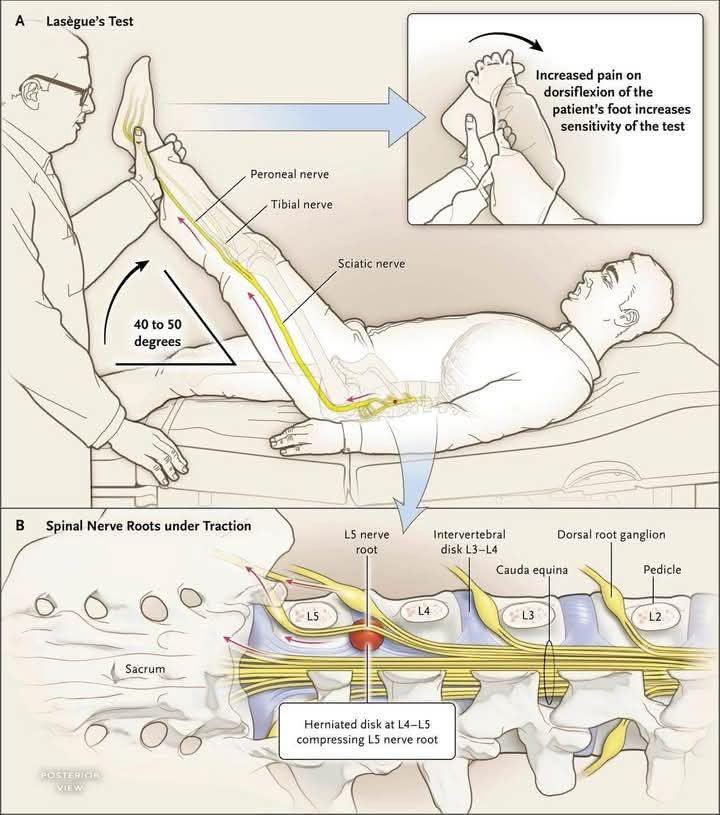
Lasegue Test /Straight Leg Raise (SLR) Test:
Purpose:
To check for nerve root irritation in the lumbosacral area, often caused by a herniated disc or other nerve compression.
Procedure:
The patient lies down while the examiner lifts their straight leg to flex the hip.
Positive sign:
The test is considered positive if pain radiates down the leg, particularly between (35 degree and 70 degree) of hip flexion, which suggests nerve root tension.
Additional Assessment:
The examiner may then have the patient flex or point their foot (dorsiflexion) to see if the pain worsens, which can help confirm the diagnosis.
Historical context:
The test is named after Dr. Charles Lasegue, but it is believed that Dr. Lazar Lazarevic was the first to describe it.
 PHYSIOHEALER.