As, far related to sports injuries, a common tendon tear mostly occurs in players (men) as it is known as Achilles Tendon Tear.
The Achilles tendon is a tough band of fibrous tissue that connects the calf muscles to the heel bone (calcaneus). The Achilles tendon is also called the calcaneal tendon.
INSERTION :
The gastrocnemius and soleus muscles (calf muscles) unite into one band of tissue, which becomes the Achilles tendon at the low end of the calf. The Achilles tendon then inserts into the calcaneus. Small sacs of fluid called bursae cushion the Achilles tendon at the heel.
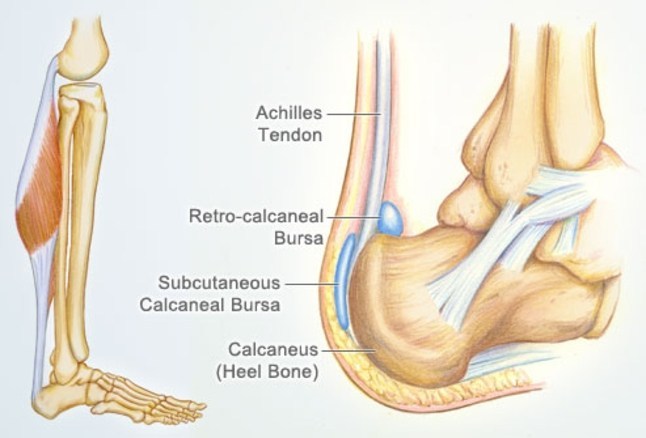
The Achilles tendon is the largest and strongest tendon in the body. When the calf muscles flex, the Achilles tendon pulls on the heel. This movement allows us to stand on our toes when walking, running, or jumping. Despite its strength, the Achilles tendon is also vulnerable to injury, due to its limited blood supply and the high tensions placed on it.
ATTACHMENT OF ACHILLES TENDON :
The tendon provides a distal attachment site for the gastrocnemius (lateral and medial heads) as well as the soleus muscles. It inserts onto the posterior surface of the calcaneus (heel bone). The plantaris tendon also fuses with the medial side of the Achilles tendon proximal to its attachment site.
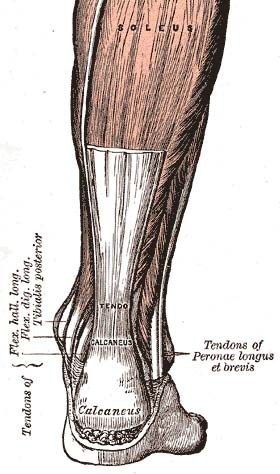
FUNCTIONS OF ACHILLES TENDON:
Through the action of the triceps surae, which raises the heel and lowers the forefoot, the Achilles tendon is involved in plantar flexion of the foot (approximately 93% of the plantar flexion force).The anatomy of the tendon provides for both elasticity (recoil) and shock-absorbance in the foot.It is the largest and strongest tendon in the human body and is capable of supporting tensional forces produced by movement of the lower limb.
 PHYSIOHEALER.